Eyes on roofs nobody
has seen in years.
Parapet gutters, tower roofs, junctions and high slopes are where church maintenance problems start — and where nobody can look without scaffolding. We photograph them at close range from the air and deliver an observation report written for your architect, within days. No scaffolding, no ladders, nothing touches the fabric.
Scope note. Our church work is external visual aerial inspection recorded as observations only — not a structural survey, condition survey or chartered RICS building survey, and not heritage, faculty or conservation advice. The statutory quinquennial inspection remains the role of your appointed inspecting architect or surveyor; our imagery supports that role and never replaces it. Subject to our standard terms & conditions.
Every five years. By Church law.
Section 45, Ecclesiastical Jurisdiction and Care of Churches Measure 2018 · Church Buildings Council guidance
Every Church of England church building must be inspected at least once every five years — the quinquennial inspection, required under each diocese’s scheme by s.45(1) of the 2018 Measure. The inspector is appointed by the PCC on the DAC’s advice — in practice a registered architect or chartered building surveyor under most diocesan schemes — and because a QI is a visual inspection, every report carries a limitations section listing what could not be seen.
Those unseen areas are where we fit. The full statutory picture — and how our pre-QI packs, on-the-day flights and between-inspection checks support that cycle — is on the dedicated quinquennial inspection page.
Aerial roof inspection
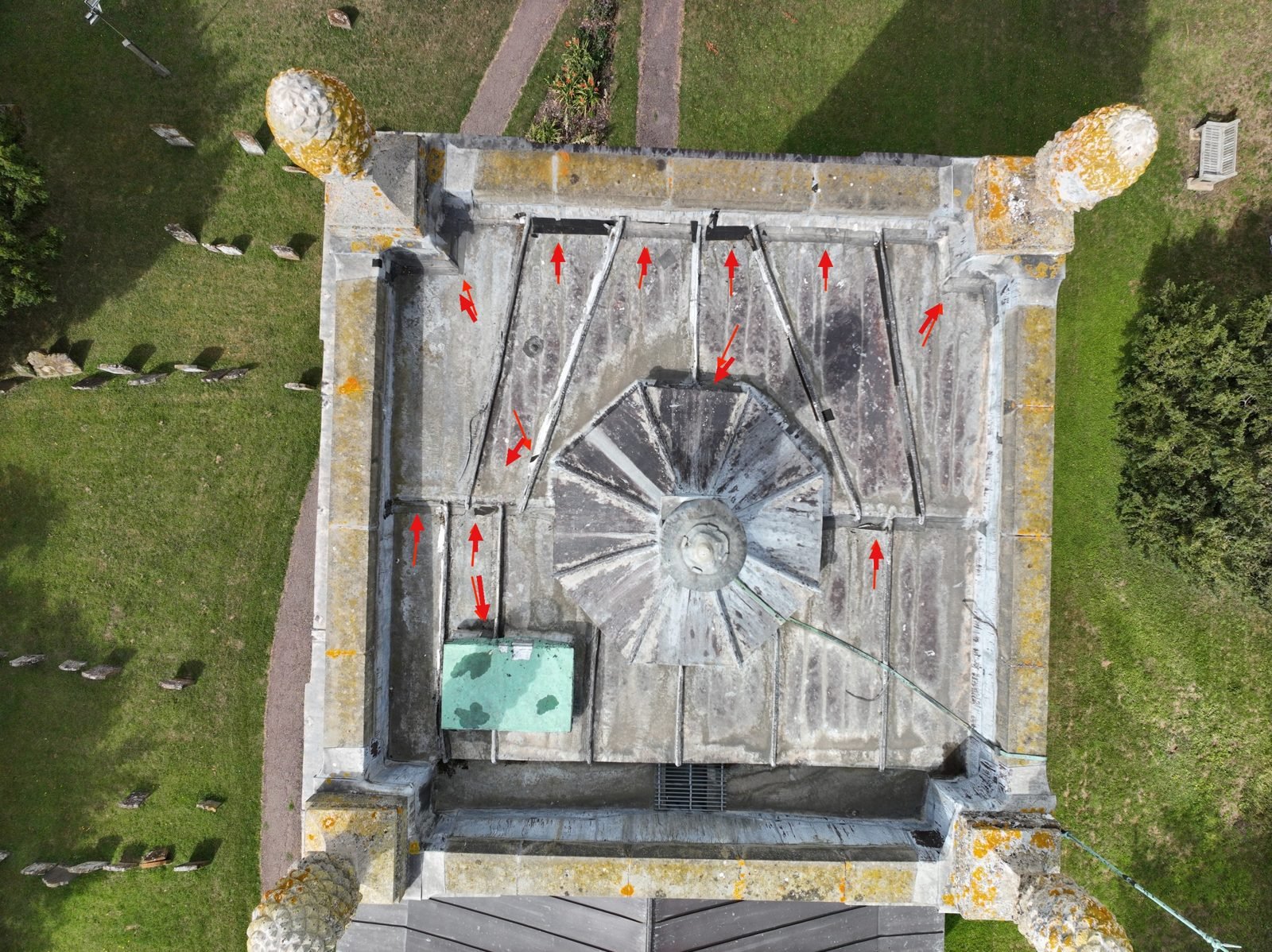
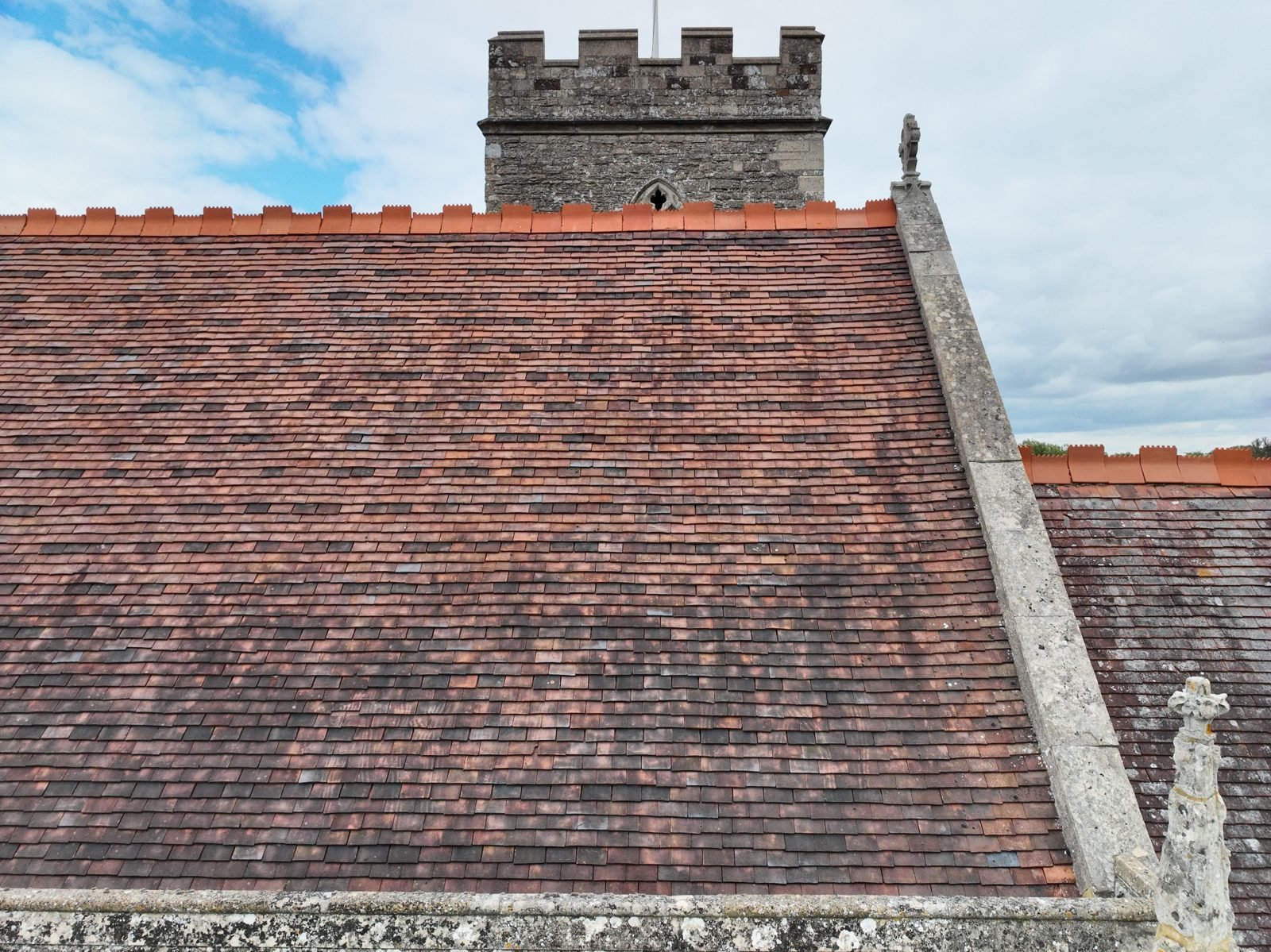
The core service. One visit captures nadir and oblique photography of every roof slope, parapet gutter, junction, and the tower — the areas that generate most church repair need and that a ground-level look simply cannot reach. Every frame is reviewed with AI assistance and checked by the remote pilot — the software helps sort, the pilot decides what is flagged, and every flagged location is referenced to its source photographs.
You receive a concise observation report and the complete photo set by secure download, within days — written to hand straight to your architect or surveyor, whether there’s a known concern or you simply want a dated record of the whole roofscape.
Quinquennial support, for your architect
Quinquennial inspections are defined as visual inspections from ground level, ladders or accessible roofs — which is why every QI report carries a limitations section listing what couldn’t be seen. Flown shortly before the inspection, or on the day under the architect’s direction, our imagery puts the inaccessible areas in front of the inspector: parapet gutters, tower roofs, valley junctions, high-level stonework.
We work the way diocesan guidance expects: supplementary to the physical inspection, at the inspecting architect’s discretion, with coverage clearly recorded so the report can state exactly what was viewed by drone. For architects and surveyors, one relationship covers every church on your list. Pre-QI packs, on-the-day flights and practice-wide arrangements are covered in full on the dedicated quinquennial inspection page.
Roof-metal baseline & security records
Lead, copper and lightning-conductor metal remain targets for theft from church roofs, and church insurance policies commonly make approved forensic marking of external metalwork a condition of metal-theft cover. A dated, high-resolution photographic baseline of the roof metal gives the church and its insurer a clear record of what is there — and, should the worst happen, evidence for the police report and the claim.
This is where our background is different: Critical Asset’s flagship work is security assessment for high-value remote sites. We handle church roof imagery with the same discipline — secure, Cyber Essentials-certified data handling, and a strict policy of never publishing roof plans of named churches.
Grant evidence, records & fundraising
Heritage funding is increasingly competitive and evidence-based — the Places of Worship Renewal Fund, launched in 2026 and delivered through Historic England, targets urgent structural and roof repairs. Applications supported by dated, high-resolution photography of the actual condition of the roof stand on much firmer ground than descriptions alone.
The same visit can serve the longer term: a repeatable photographic record of the whole building for the parish archive and insurance file, and striking aerial imagery for appeal campaigns, orders of service and the church website. For churches that want a standing arrangement — an annual flight, gutter-season checks, a growing archive — our Managed Capture programmes put it on a fixed retainer.
The Church Flight Pack.
Diocesan guidance asks churches to collect an operator’s paperwork before any drone flies — and rightly so. Before we arrive, your churchwardens receive our Church Flight Pack: a written approval form, evidence of our CAA Operational Authorisation, our insurance certificate, a site-specific risk assessment, a method statement and the flight plan — ready to file in the church logbook. No chasing, no surprises on the day.
Flights are timed around services, events and visitors, we ask about known bat roosts as standard, and the pilot walks the site with your churchwarden before anything takes off.
Asked by wardens, treasurers and architects.
Something else on your mind? Ask it on a free Discovery Call.
Do we need faculty permission?
Aerial photography involves no physical intervention in the fabric, so it can usually proceed without the consents physical works require — subject to airspace and operational requirements, the church’s own permission, and any diocesan guidance you wish to follow. Our Flight Pack covers the paperwork.
Can this replace our quinquennial inspection?
No — the QI is legally reserved to your appointed quinquennial inspector, chosen by the PCC on the DAC’s advice. Our imagery is supplementary evidence used at their discretion. It shows them what scaffolding would otherwise be needed to see.
What do we actually receive?
A concise observation report — what was photographed, what was flagged for close review, what was not — plus every photograph at full resolution by secure download, within days of the flight.
Is it safe for the building and visitors?
Nothing touches the fabric. Flights run under our CAA Operational Authorisation with a site-specific risk assessment and £10m public liability cover, timed around services and visitors, bat-aware as standard.
How much does it cost?
Fixed price per brief — no hourly rates. Tell us about your church and we’ll return a fixed quotation within 2 working days. Benefice bundles cover several churches in one visit day.
Who sees the photographs?
You do — and whoever you choose. We’re ICO-registered and Cyber Essentials certified, imagery handling is agreed with the PCC, and we never publish roof plans of named churches.
Ten churches, photographed and reported.
St Thomas à Becket
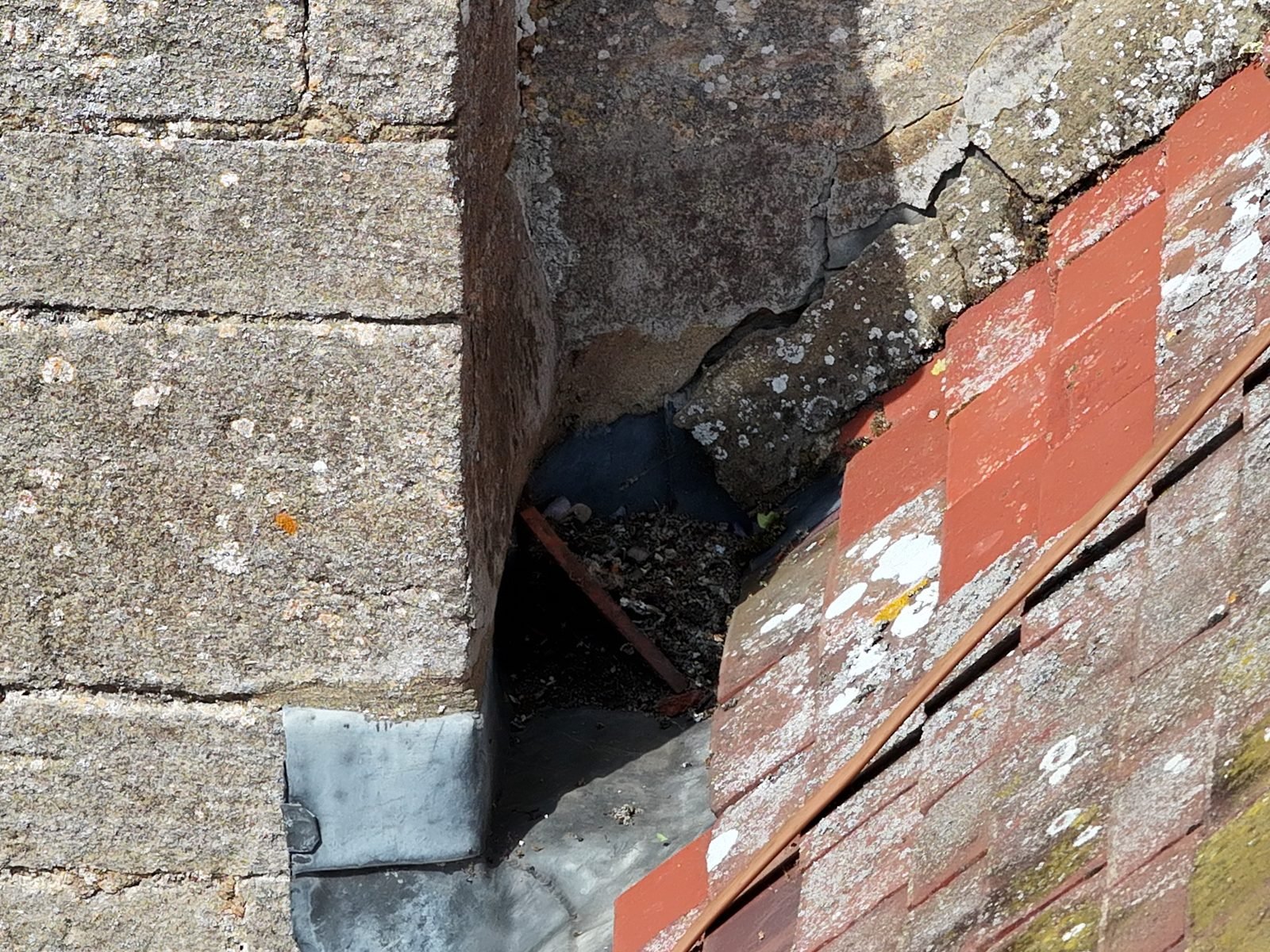
The steeple keeper reported rain entering at the roof-to-tower junction. We photographed it at close range — mortar fillet, debris and leadwork — in wording the church handed straight to its architect.
Read the case study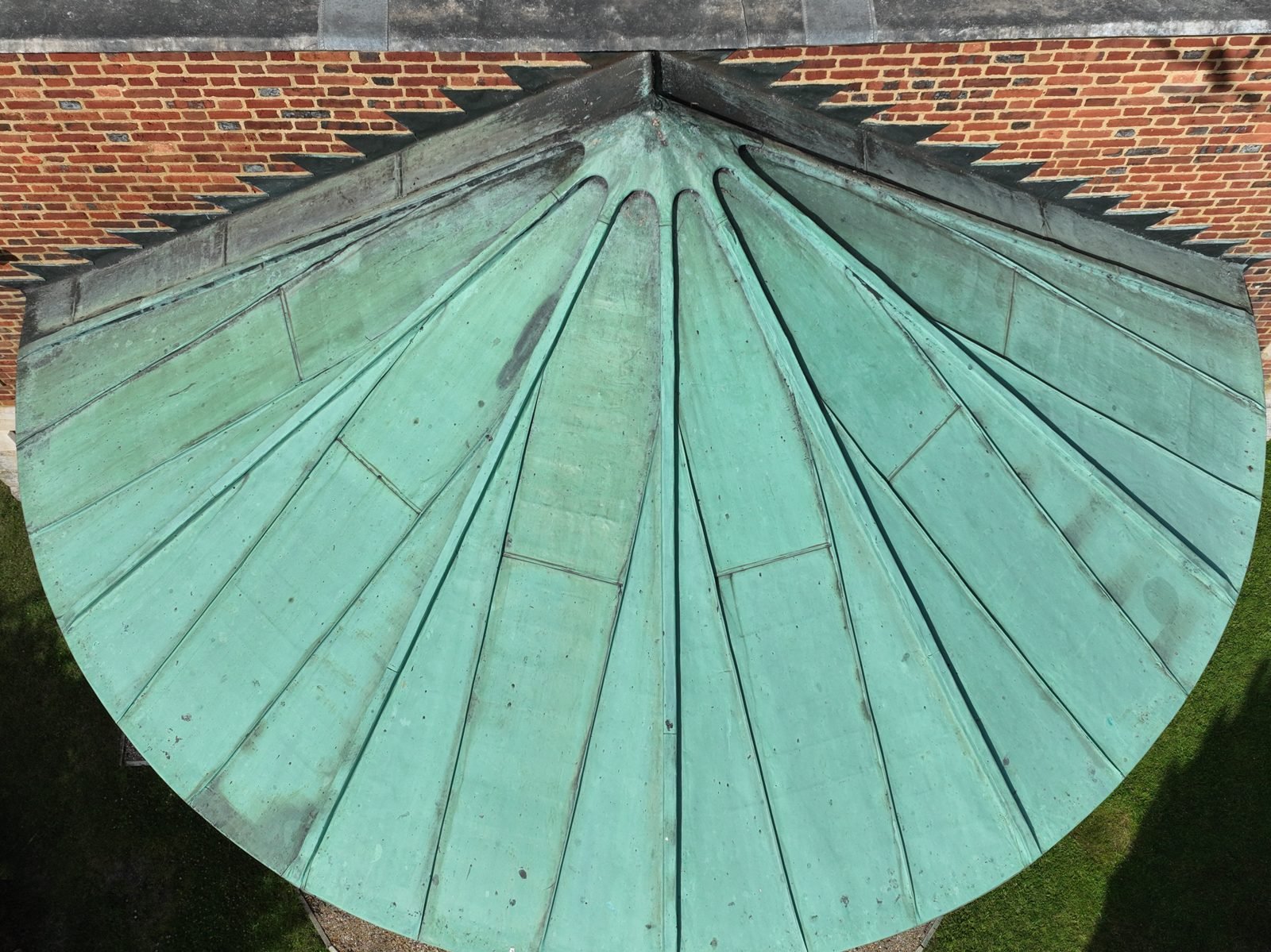
St Mary Magdalene
Robert Hooke’s church, completed in 1680: copper dome, tower roof and parapet gutters captured in 161 frames — every one reviewed, flagged locations marked on an annotated overview.
Read the case studyAll Saints
No locations flagged — and that is the value: a dated, high-resolution baseline of the whole roofscape for the QI file, the next storm and the insurance conversation.
Read the case studyIn their words.
Every quote is published with the client’s written permission, in their own words.
“Martin offered to photograph our roof from the air, and we were glad to have accepted his offer. Martin complied with the relevant legislation and did a thorough and professional job. The photographs and report he supplied were very thorough and helpful, and were supplied within days of his visit. We now have a complete and dated record of our roof. We would thoroughly endorse the work of Critical Asset.”
Ruth Cooling
Administrator, Whaddon Way Church, Bletchley
“As our quinquennial inspection was due soon this seemed a good opportunity to take up to provide further information for this inspection. … Martin brought an assistant with him. Both were very friendly and communicative of what the process would be and what was going on at each stage and were willing to answer any questions I had. The drone was competently flown with no problems during the flight. … Both reports were very professionally laid out and clear to read and understand … The quality of the photos was excellent allowing zooming in on a computer screen without losing too much definition. It was easy from the report to physically identify the areas over the church building.”
Jeremy Letts
Churchwarden, St Peter’s, March
“We wanted to see the condition of the church roof. This was carried out by drone operated by Martin. This was carried out in a professional and safe manner by Martin. The reports and photographs were then supplied to me for use by the PCC and were very informative and will be a great help at our next 5 year inspection.”
Clive Alexander & Rev Andrew Smith
Churchwarden & Vicar, St John the Evangelist, March
“Martin provided a professional and thorough roof inspection. His report was clear and concise and provided sufficient information to be able to begin to plan a schedule of works needed on our roof.”
Father Sam Frampton
Parish Priest, St Paul’s, Horn Hill, Chalfont St Peter
“Critical Asset provided a professional service and we would highly recommend them and their technology for understanding what is happening on parts of the church building that the eyes cannot see. The reports identified key areas of concern and have helped us plan for a schedule of works going forward and cost-management.”
Fr Sam Frampton
Parish Priest, All Saints, Chalfont St Peter
“… Martin obtained all the correct permits on our behalf and offered a friendly and professional service. More importantly he was respectful of dates when we had weddings in the church and avoided those dates. His reports were clear and helpful to begin to plan for the work needed to get our roof back to a high standard.”
Fr Sam Frampton
Parish Priest, St Peter’s Parish Church, Chalfont St Peter
Tell us about your church.
A leak the steeple keeper has reported, a quinquennial coming up, a grant application that needs evidence, or roofs nobody has seen in years — start with a short call and we’ll tell you honestly whether an aerial inspection will answer the question. Proof first: read the church case studies.
Honest advice on whether aerial inspection fits — and a fixed quotation within 2 working days if it does.
Book a Discovery Call